If you’re a movie buff, you’ve likely seen the “R” rating attached to many films. But what does rated R actually mean? This guide covers everything you need to know about R-rated movies, from the type of content they contain to age restrictions and parental guidance tips.
- R stands for Restricted — no one under 17 is admitted to an R-rated movie without an accompanying adult
- Content triggers include strong language, graphic violence, sexual nudity, and drug use — any one of these can earn an R rating
- The MPAA’s Classification and Ratings Administration (CARA) — a board of parents reviews each film and votes on its rating
- Theaters enforce age checks with valid ID — children under 6 may be barred even with an adult present
- R-rated films can still be box office hits — movies like Joker and The Matrix grossed hundreds of millions despite the restricted rating
#Understanding the MPAA Rating System
First, let’s cover the basics of the movie rating system that the R rating falls under.
#The Five MPAA Movie Ratings
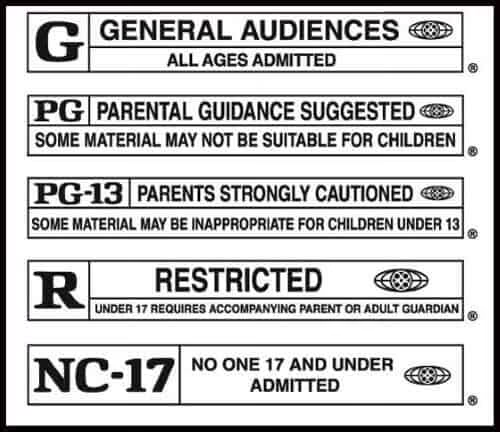
In the United States, the Motion Picture Association of America (MPAA) assigns ratings to films to provide guidance to viewers about the type of content they contain. The five MPAA ratings are:
-
G (General Audiences): Suitable for viewers of all ages. No nudity, sex scenes, or drug use, and violence is minimal.
-
PG (Parental Guidance Suggested): Some material may not be suitable for children. May contain mild language and brief nudity that’s not sexually oriented. Violence is present but minimal.
-
PG-13 (Parents Strongly Cautioned): Some material may be inappropriate for children under 13. Contains more intense violence, brief nudity, and harsh language compared to PG. For more details on this rating, check out our guide on the TV-14 meaning.
-
R (Restricted): Contains adult material. No one under 17 admitted without an accompanying adult. Features hard language, intense violence, sexually-oriented nudity, and drug abuse. We’ll dive more into the specifics of the R rating later.
-
NC-17 (Adults Only): No one 17 and under admitted. Contains content only appropriate for mature adult audiences.
#Purpose of the MPAA Rating System
The MPAA, which represents the major Hollywood studios, developed this rating system to:
-
Provide clear guidance to parents about a film’s content and age appropriateness
-
Avoid government interference and censorship of the film industry
-
Give filmmakers creative freedom while allowing viewers to make informed decisions
While not perfect, the ratings act as a tried-and-true method to indicate whether a movie is suitable for certain ages. Theaters, advertisers and media largely honor the guidelines.
#What Makes a Movie Rated R?
Now let’s focus on the R rating specifically and what it means in terms of content.

#Content in R-Rated Movies
An R-rated film contains material deemed only appropriate for adult audiences. Common reasons a movie receives an R rating include:
-
Hard language, including frequent use of expletives
-
Intense or persistent violence, like graphic murders or torture
-
Sexually-oriented nudity
-
Drug abuse
-
Mature themes not suitable for children
A good rule of thumb is that R-rated movies are too adult for viewers under 17. The content may be disturbing or inappropriate for kids and young teens.
#Who Determines R Ratings?
The ratings are determined by the Classification and Ratings Administration (CARA), an independent division of the MPAA. A board of parents known for their interest in child welfare view each film and collectively vote on its rating.
While filmmakers can appeal a rating they disagree with, the R rating is rarely overturned due to the adult nature of the content. Once finalized, the rating appears on all trailers, print advertising, posters, and packaging for the movie.
#What Are the Policies and Restrictions for R-Rated Movies?
So how do theaters handle R-rated movies in practice? Here’s what you should know:
#Age Restrictions for R-Rated Movies
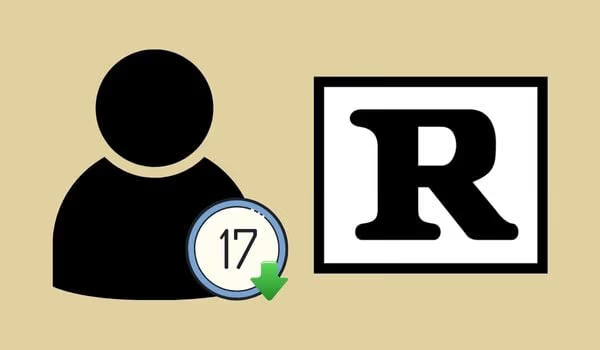
According to the official MPAA criteria, no one under 17 should be admitted to an R-rated film without an accompanying adult. That means teens hoping to see the latest horror flick or raunchy comedy need to bring a parent or guardian to get past the ticket booth.
#Movie Theater Policies
To enforce this age restriction, most cinemas have strict policies around R-rated movies:
-
Ticket sellers are instructed to ID any patron who looks younger than 17. Valid identification proving age is required.
-
For R-rated showings, children under 6 may not be admitted even with an adult.
-
Teens under 17 attending an R-rated movie must remain with their accompanying adult at all times.
While some teens may try to sneak into R-rated movies, getting caught risks removal from the theater. Overall, the system, while not foolproof, acts as an effective deterrent and enforcer of the age restrictions.
#Parental Guidance for R-Rated Movies
Many parents face a dilemma when their kids clamor to see the latest R-rated blockbuster. Here’s some guidance on navigating this tricky situation:
#Should You Let Kids Under 17 Watch R-Rated Movies?
It depends. While the R rating suggests the content is only appropriate for those 17 and up, parents are the ultimate judges of what their children can handle. Here are some factors to consider:
-
Maturity level of your child
-
Family values around issues like sex, drugs and violence
-
Potential educational or artistic merit of the movie
-
Negative influence of risky behaviors depicted
If you do decide to let your underage child see an R movie, consider:
-
Watching it with them so you can discuss any questionable content
-
Preparing them ahead of time for mature material
-
Choosing films that align with your family’s values
-
Having an open dialogue about the issues presented
It’s up to parents to decide where to draw the line to protect kids from harmful content while allowing for some freedom of choice as they get older.
#Tips for Parents
If you’re unsure about a specific movie, do your research first:
-
Read reviews from trusted family-focused critics (e.g., Common Sense Media)
-
Watch the film yourself before deciding
-
Talk to other parents who have seen it with their kids
-
Explain to children why you feel a movie is inappropriate if you prohibit it
Remember, even if “all the other kids” are watching certain movies, you as a parent have the final say in setting boundaries to keep your children safe.
Speaking of streaming, if you’re experiencing issues with Netflix not working on your TV, check out our troubleshooting guide.
#Impact of R Ratings on Box Office Success
A common assumption is that R-rated films are box office poison. However, many R-rated movies have been hugely commercially successful. Films like Joker, Logan, The Matrix, and Pretty Woman all grossed hundreds of millions despite the “restrictive” rating.
That said, big budget films often aim for the PG-13 rating to attract the widest possible audience. Movies targeting families and children in particular avoid the R rating. However, genres like horror and adult comedy thrive on R-rated content.
Overall, while the rating can influence box office, an R rating is not necessarily a kiss of death for a film’s financial prospects. Quality, mass appeal, and effective marketing still largely determine profitability.
#Why Do Filmmakers Choose the R Rating?
Some may wonder, if the R rating limits a film’s audience, why do directors purposely choose it? Here are a few key reasons:
-
To tell authentic, unfiltered stories without restrictions on content
-
To explore mature themes and complex issues
-
To depict real-world events and people accurately
-
To create horror, action, or raunchy comedy only possible with graphic content
-
To fulfill their artistic vision without compromise
For many filmmakers, the creative freedom afforded by the R rating is worth the potential loss of younger viewers. They trust there is an adult audience eager for sophisticated, mature storytelling that doesn’t hold back.
If you enjoy streaming movies at home, you may be wondering – is Fox Now free with Amazon Prime? Read our article explaining how to access Fox content.
#Future of the R Rating & MPAA System
In the age of streaming, some have questioned whether the MPAA ratings still matter. Services like Netflix and Amazon Prime Video often have their own content warnings but don’t use MPAA guidelines.
However, the MPAA system remains highly relevant for the theatrical experience, where viewers of all ages gather to watch new releases. As long as theatrically-released films aim for broad audiences, the MPAA ratings will continue to provide valuable guidance to consumers.
The MPAA system has also evolved over the years to address changing cultural attitudes. Films once rated R for relatively tame content may now receive a PG-13, reflecting society’s shifting standards. As culture continues to change, the rating system will likely adapt.
The R rating and wider MPAA system, though sometimes criticized, have stood the test of time as an important tool for informing audiences about movie content, protecting children, and preserving creative freedom. The future will undoubtedly bring more adjustments and updates to reflect how people watch movies today.
And for those who like to watch films on the go, our guide on using Popcorn Time with Chromecast will help you cast content to your TV.
#FAQ
#What does rated R mean exactly?
Rated R stands for “Restricted.” It means the film contains adult material and no one under 17 can be admitted to a theater showing without a parent or adult guardian present. The rating is assigned by the MPAA’s Classification and Ratings Administration after reviewing the film’s content.
#Can a 16-year-old see an R-rated movie alone?
No. Theaters require anyone under 17 to be accompanied by a parent or adult guardian for R-rated showings. Most cinemas ask for valid photo ID to verify age at the ticket counter.
#What kind of content triggers an R rating?
Films receive an R rating for strong language, graphic violence, sexually-oriented nudity, drug use, or a combination of these elements. A single intense scene can be enough to push a movie from PG-13 to R.
#Is an R rating the same as NC-17?
No, they are different. R-rated movies allow viewers under 17 if accompanied by an adult, while NC-17 films ban all viewers 17 and under regardless of adult supervision. NC-17 typically indicates more explicit content than R.
#Do R-rated movies make less money at the box office?
Not always. Films like Joker, The Matrix, and Logan each grossed hundreds of millions worldwide despite carrying an R rating. However, studios targeting the widest possible audience often aim for PG-13 because it removes the age barrier for ticket sales.
#Should parents let their kids watch R-rated movies?
That depends on the child’s maturity and the specific film. Parents should preview the movie or read trusted reviews on sites like Common Sense Media before deciding. Watching the film together allows parents to discuss any troubling content in real time.
#How is an R rating different from TV-MA?
R is an MPAA rating used for theatrical films, while TV-MA is a TV Parental Guidelines rating for television content. Both indicate material intended for mature audiences, but they come from separate rating systems with different review boards. TV-MA content may appear on streaming platforms that do not use the MPAA system.
#Can filmmakers appeal an R rating?
Yes, directors can appeal to the MPAA’s appeals board if they disagree with the rating. The appeals board watches the film and votes on whether to change it. However, R ratings are rarely overturned because the adult content that triggered the rating usually remains in the final cut.
#Bottom Line
Here are the most important points to remember about the R rating:
-
R stands for “Restricted.” No one under 17 is admitted without an accompanying adult.
-
R-rated movies contain adult content like hard language, intense violence, sexually-oriented nudity, and drug abuse.
-
The MPAA ratings provide guidance to families about a film’s age appropriateness.
-
Parents should research R-rated content themselves to decide if it’s suitable for their children.
-
An R rating doesn’t guarantee box office failure. Some R-rated films have been very commercially successful.
-
Filmmakers may choose an R rating to explore mature themes without content restrictions.
-
The MPAA system has limitations but remains a relevant and important guide for consumers, especially for theatrical releases.
The R rating is a sometimes complicated but crucial aspect of the film industry. By understanding its meaning and implications, viewers can make informed decisions about the movies they and their families watch. Increased media literacy around this issue leads to smarter, safer consumption for audiences of all ages.