If you’re shopping for a new TV, TCL and Samsung are two brands likely at the top of your list. As leading manufacturers, they both make quality televisions across a range of sizes, display technologies, and price points.But which brand comes out on top in areas like picture quality, smart features, audio and design? With prices constantly evolving, what TV delivers the most bang for your buck?
As home theater enthusiasts, we wanted to conduct an unbiased Samsung vs TCL comparison to help you invest wisely. We’ll break down how they differ in key categories and reveal which ultimately provides better overall value.
Our evaluation is tailored specifically to the needs of everyday viewers and streamers in the 65-75 inch screen size range with a budget up to $1,500. Read on to discover which brand suits your priorities.
- TCL 6-Series mini-LED costs $750 for 65 inches compared to $1,100 for Samsung’s Q70 QLED at the same size
- Samsung leads in upscaling and color accuracy with machine learning image processing and smart calibration sensors
- TCL mini-LED backlighting produces deeper blacks thanks to Contrast Control Zones that outperform Samsung’s edge-lit panels
- Roku TV OS on TCL sets runs fewer ads and offers simpler navigation than Samsung’s feature-heavy Tizen platform
- Both brands support Dolby Vision HDR and all major streaming apps including Netflix, YouTube and Prime Video
#Quick Pros and Cons: TCL vs Samsung
TCL Strengths: Excellent contrast and color via mini-LED and QLED; Roku TV OS intuitive and ads-free; great pricing for 65-75″ 4K TVs ($500-1,200).
Samsung Strengths: Leading image processing and upscaling; bright QLED panels show vivid HDR; Tizen OS gives lots of customization; premium design.
TCL Weaknesses: More budget build quality in materials used; sound quality just okay without soundbar.
Samsung Weaknesses: Prone to oversaturation of colors in some picture settings; far more costly for higher-end models.
Brand reputation goes a long way when comparing companies like market leader Samsung to the budget-friendly TCL. But there’s more to the story – from contrast and brightness to smart platforms and audio power, panel types to ports, every TV spec impacts the viewing experience.
We’ll compare Samsung QLED TVs versus comparable TCL 6-Series mini-LED sets to gauge key strengths and weaknesses.
#Which Brand Has Better Picture Quality?
The most important element for any television is surely performance showing movies, sports and other video content. Samsung and TCL both use quantum dot filter layers in their high-end 4K sets to boost color and contrast through technologies branded as QLED by Samsung and “Quantum Contrast” in TCL’s terminology.
But there are some key differences in how they achieve image quality results:
-
Samsung QLED TVs excel with industry-leading upscaling from HD to 4K clarity. They also offer superb smart calibration via built-in light sensors and extensive picture settings.
-
TCL 6-series implementations of mini-LED backlights with Contrast Control Zones provide exceptional contrast control for deep blacks beside bright highlights in the same scene.
Both support key HDR formats like Dolby Vision which boost color and contrast in footage mastered for next-generation video capabilities.
In comparisons of TVs from these manufacturers calibrated with test patterns and demo clips, Samsung QLED televisions like the Q70 often have an advantage for color accuracy while TCL models like the R635 excel with dark scene visibility.
#Review of Smart TV Platforms: Roku vs Tizen OS
Almost as vital as video is smart functionality accessing your favorite streaming services. Here Samsung Tizen goes toe-to-toe with Roku OS found in TCL sets. Which fares better?
The answer depends greatly on your preferences managing apps and customization.
Roku wins points for sheer simplicity delivering a straightforward home screen of installed streaming channels along with universal search. Their platform lacks clutter and responsively launches shows though some TCL Roku TVs may struggle connecting to Wi-Fi at times. It also serves up fewer ads than competitors.
Samsung’s Tizen takes a kitchen-sink approach to smart functionality that’s adaptable but sometimes overwhelming. An Ambient Mode, for example, lets the TV screen blend into your living room with enticing visuals when you aren’t actively watching shows. Samsung also gives you greater control over tweaking picture modes.
Both smart systems provide access to all the expected offerings whether it’s Netflix, YouTube, Prime Video, HBO Max or niche apps like Twitch plus live news and weather.
#How Does Sound Quality Compare Between Samsung and TCL?
Are Samsung or TCL speakers better for TV audio quality? Here’s the reality – few buyers of 4K televisions in the 65”+ screen size range will rely on integrated speakers over their sound system. Larger panels necessitate mounting or installing the TV in spots that require an external speaker setup.
For those without surround sound, Samsung installs slightly more powerful speakers on mid-range and premium models. Their sets typically offer 20W power while TCL equips comparably priced units with 16-18W audio.
But for most, built-in sound reproduction should not sway your buying decision. Instead, factor in smart platform features and connectivity to ARC/eARC soundbars and receivers. You might also compare audio capabilities against other major brands like Samsung TV vs Panasonic TV or Samsung TV vs XiaoMi TV.
#Design & Build Quality Differences
TCL makes competitively rated televisions across their Roku smart lineups which offer strong specifications per price bracket. But some tradeoffs for value do come in materials and design.
Many TCL models stand on basic plastic feet versus more sleek metal stands in Samsung TVs. Similarly Samsung uses higher-grade plastics and materials in their construction including slimmer bezels. Consequently while TCL 4K image quality punches above its class, build quality feels thinner and less exceptional.
Should this steer shoppers toward Samsung? Only if you have cash to spare and value form as much as function. Remember TCL sweetens affordability by cutting corners on premium build elements. Samsung leans stylistically into luxury finishes.
#Price & Budget Comparison: Samsung vs TCL Value
Here’s where makers diverge most radically: MSRP pricing. Samsung holds premium cachet befitting massive brand recognition and consistently high ratings. As a result their television values skew higher.
By contrast, lack of legacy and brand power positions TCL as a scrappy budget player in shopper minds. Similar technology gets discounted versus big names though TCL TVs may flicker under certain conditions.
Let’s illustrate with everyday models: Samsung’s 65” Q70 QLED carries a $1,100 price tag recently versus just $750 for a TCL 65” R635 mini-LED.
Similar contrasts hit the largest screen sizes where TCL’s 75-inch mini-LED costs hundreds less than Samsung’s fashionable “The Frame” art style QLED model.
Clearly TCL stretches your dollars further. But Samsung makes a case for splurging on design, prestige and best-in-class processing. Your financial flexibility determines suitable value.
#Our Top Recommended Picks
Use this expert insight to narrow suitable options – then judge each model with your streaming priorities in mind.
#Best Budget Big Screen: TCL 65” 6-Series Mini-LED QLED (Model 65R655)
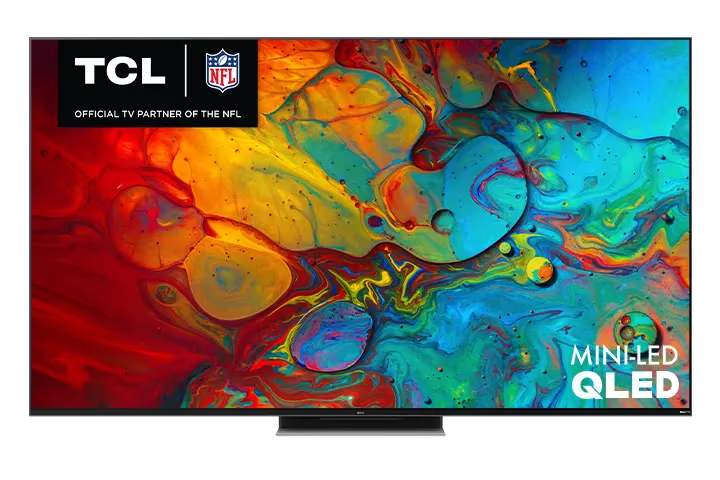
TCL’s Roku smart mini-LED TVs draw rave reviews for contrast thanks to mini-LED backlights and plenty of dimming zones. Expect excellent color saturation from quantum dot technology alongside 4K clarity and Dolby Vision HDR support.
For less than $1,000 the 65-inch 6-Series delivers standout home theater specs. Sound leaves room for improvement with a basic 16W audio system. But focus falls rightly on its richly cinematic pictures.
#Best Mid-Range Samsung QLED: Samsung 65” Q70 Series Quantum 4K UHD TV
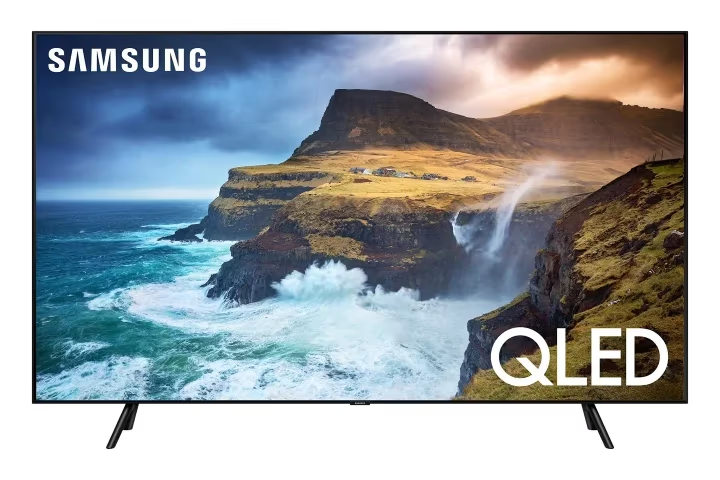
Samsung’s bread-and-butter Q70 possesses outstanding color range and sharpness bolstered by machine learning image processing. Contrast still impresses despite edge-lit backlights without dense dimming zones. This television upscales lower-quality signals with aplomb and looks beautiful from any angle.
Smart navigation feels futuristic with Bixby voice assistance and Ambient Mode visuals. Expect to invest over $1,100 for 65 inches of near-premium Samsung TV goodness. 20W speakers deliver better-than-expected built-in audio quality.
#FAQ
#What is the difference between LED and QLED television types?
LED TVs use standard LED backlights without color enhancement layers. QLED adds quantum dot filters that improve color volume and peak brightness through inorganic nanoparticle technology. Samsung and TCL both produce QLED televisions at various price points.
#Which brand offers better viewing angles?
Samsung QLED TVs place filters differently than TCL to preserve color and contrast from off-center seats. Samsung sets allow around 30 degrees of side-angle viewing without obvious degradation, while some TCL models show dropped saturation beyond 20 degrees off-axis.
#Which company makes better TVs for gaming?
Samsung installs more gaming-centric display settings with lower input lag and features tailored to console and PC players. TCL 6-Series also enables fast response times through THX Certified gaming modes. Samsung holds a slim lead overall for optimizing game visuals, but TCL closes the gap at its lower price point.
#Which brand performs better in daylight viewing?
Samsung Quantum Dot panels measure 10-15% brighter for both SDR and HDR content. Their QLED TVs outperform TCL in sunlit living rooms as a result. TCL compensates with dynamic brightness boosting through mini-LED dimming zones, though color saturation trails Samsung in bright conditions.
#Do TCL TVs last as long as Samsung TVs?
Both brands build their LCD panels to similar longevity standards, typically 40,000-60,000 hours of backlight life. Samsung uses slightly higher-grade plastics and construction materials that may resist wear better over time. TCL offsets this with lower replacement cost if a set needs upgrading after several years.
#Can you use a soundbar with both TCL and Samsung TVs?
Yes, both brands support HDMI ARC and eARC connections for external audio equipment. Samsung TVs pair especially well with Samsung soundbars through proprietary Q-Symphony technology. TCL Roku TVs work with any HDMI-compatible soundbar and make setup straightforward through the Roku audio settings menu.
#Are TCL and Samsung TVs compatible with all streaming apps?
Both platforms support Netflix, YouTube, Prime Video, Disney+, HBO Max, Hulu and most other popular streaming services. Roku TV on TCL offers a universal search feature that scans across all installed channels. Samsung Tizen provides similar cross-app search along with exclusive Samsung TV Plus free channels.
#Bottom Line
There’s a reason TCL wins Top Value awards year after year – they deliver 85-90% of the performance of high-end brands at just 60-75% of retail costs. While we found strengths and weaknesses for both manufacturers, superior TCL pricing for their Mini-LED Quantum Contrast models cements their value advantage.
In areas that matter most – overall 4K image quality with rich color and deep black level capability – TCL makes a very compelling case stacking up strongly against far more expensive Samsung alternatives. Since even audio and smart features prove very capable for most, we encourage buyers to save hundreds opting for TCL over Samsung TVs.
That said, discerning videophiles, gamers and homeowners preferring a bold aesthetic might justify paying extra for Samsung. Try before you buy if possible. And soundbars render audio differences nearly moot anyway.
Ultimately you can’t go wrong with leading models from either electronics giant. But TCL stretches your TV dollars significantly further. Their mini-LED contrast and smart Roku ecosystem look extremely enticing under $1,000 for 65″ + screen sizes – delivering phenomenal home theater quality without emptying your wallet in 2026.